
You open a game on a quick break and hit a choice right away: play solo or jump into a room with other people. That little decision shapes the whole vibe. In the single player vs multiplayer games debate, there is no one-size-fits-all winner. It comes down to mood, time, skill level, and whether you want quiet focus or instant chaos.
For casual players, this choice matters more than people think. A five-minute puzzle feels very different when you are solving it alone versus racing someone else. A driving game can be relaxing by yourself, then suddenly feel intense when every turn becomes a competition. If you play online for fun, not for rank, knowing what each mode is good at helps you find the right game faster.
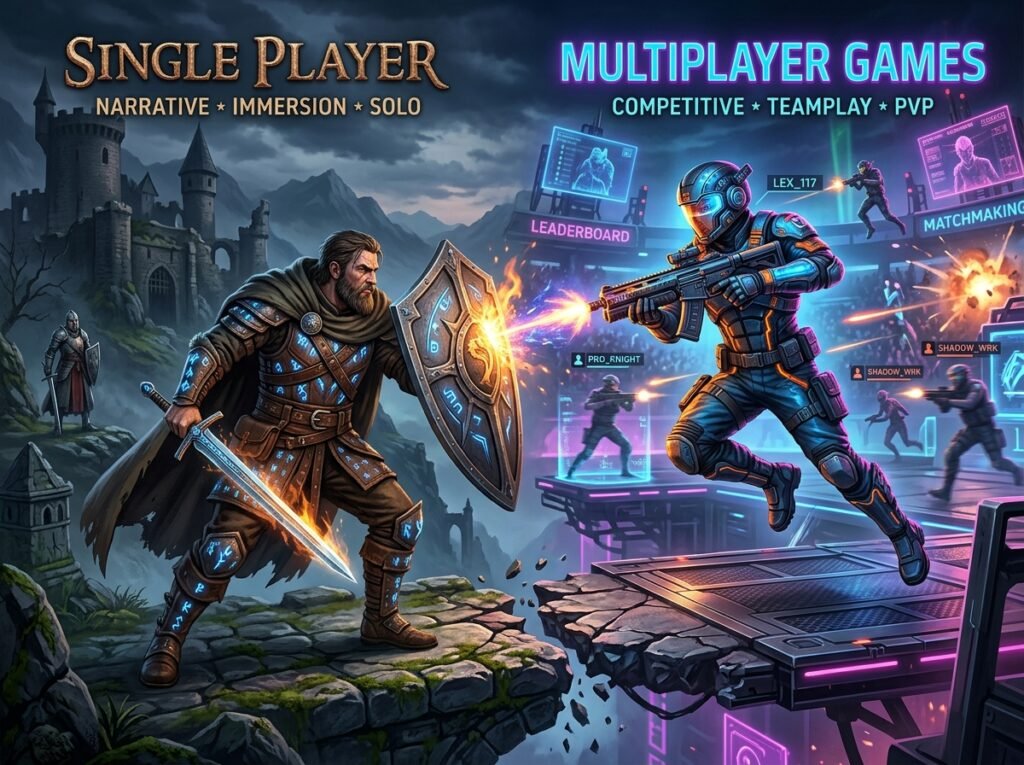
At the most basic level, single-player games are built around you. You set the pace, make the choices, and deal with the game world on your own. Multiplayer games bring in other players, whether you are teaming up, competing, or just sharing the same match.
That sounds simple, but the feel is completely different. Single-player games tend to give you more control over your experience. You can pause, retry, experiment, and learn without pressure from other people. Multiplayer games trade some of that control for energy. Other players make matches less predictable, which can be exciting, funny, and sometimes a little frustrating.
For browser players and casual fans, that difference is huge. If you want instant fun without a learning curve, solo play often feels smoother. If you want surprise, competition, or social laughs, multiplayer can be the better pick.
Single-player games work because they are easy to slip into. No waiting for teammates. No worrying about chat, rankings, or whether someone will quit mid-match. You click Play, and the game starts on your terms.
That makes solo games perfect for short sessions. Puzzle games, dress-up games, kids’ games, platformers, and many driving titles are great examples. You can enjoy them for three minutes or thirty, and the experience still feels complete. For younger players, solo games can also feel safer and easier to understand because the challenge comes from the game itself, not from strangers online.
There is also a comfort factor. Single-player games are great when you want to relax instead of perform. If you have had a long day, a calm puzzle or simple action game can feel a lot more inviting than a competitive match. You can fail, restart, and learn at your own speed. That freedom is a big reason solo gaming never goes out of style.
Story can matter too, even in lighter games. Single-player design often gives more room for progression, levels, and personal achievement. You are not just reacting to other players. You are moving through a challenge that was made for one person to enjoy.
Multiplayer games bring a kind of energy solo games usually cannot match. Real people are unpredictable. They make matches funnier, messier, and more memorable. One round can turn into a close race, a silly mistake, or a comeback you talk about later.
That social spark is the main reason people love multiplayer. You are not just playing a game. You are sharing a moment. That can mean teaming up with friends, competing with classmates, or testing yourself against random players. Even simple games become more exciting when another person is involved.
Multiplayer also adds replay value fast. A solo level stays mostly the same each time. Human opponents do not. Their choices change the match, so the same game can feel fresh for longer. This is why sports games, battle games, shooters, racing games, and party-style games often shine in multiplayer.
For many casual players, multiplayer is best when it stays easy to enter. If it takes too long to set up, the fun drops fast. Quick browser sessions work well here because they keep the focus on playing, not waiting around.
This is where the debate gets real. The better mode often depends less on the game and more on how you feel right now.
If you want calm, single-player usually wins. It lets you focus, practice, and enjoy the game without outside pressure. It is also a strong choice if you only have a few minutes and do not want interruptions.
If you want excitement, multiplayer often takes the lead. It creates urgency. Even a basic game can feel big when another player is trying to beat you to the finish line or outscore you before time runs out.
If you are learning a new game, solo mode is often the friendlier place to start. You can understand controls and mechanics before jumping into competition. But if you already know the basics and want a challenge, multiplayer can push you to improve much faster.
Neither mode is better in every situation. The smart move is matching the mode to your mood.
Single-player games are convenient, but they can feel repetitive if the content is thin. Once you solve the puzzle or beat the level, the surprise may be gone. Good solo games handle this with better level design, unlocks, or score chasing, but not all of them do.
Multiplayer games stay fresh longer, but they come with more friction. Other players can make a game more fun, but they can also make it more annoying. Lag, matchmaking, uneven skill levels, and toxic behavior can all get in the way. For younger players or anyone who just wants a stress-free break, that matters.
There is also the pressure factor. In single-player, losing usually feels private. In multiplayer, losing can feel public, even in a light game. Some players love that thrill. Others would rather skip it completely.
That is why simple, casual platforms do well with both styles. Sometimes you want a fast solo puzzle. Other times you want to challenge someone in a quick sports game. Having both options makes it easier to keep playing instead of bouncing away.
For kids and casual players, single-player games are often the easier starting point. The rules are clearer, the pace is gentler, and there is less chance of running into frustrating social behavior. They are great for building confidence, especially with genres like puzzles, memory games, dress-up, or simple arcade action.
That said, multiplayer can be fantastic when the game is easy to understand and the environment stays light. Friendly competition can make games more exciting and help players stay engaged longer. Racing, sports, and simple two-player challenge games often hit that sweet spot.
For parents, the best choice usually depends on age and supervision. Solo play is simpler to manage. Multiplayer can be a lot of fun, but it works best when the game is clearly designed for a broad audience and easy to jump into.
A good shortcut is to ask one question before you hit Play: do you want control or unpredictability?
If you want control, pick single-player. You will get a cleaner, calmer session that starts fast and ends when you want. If you want unpredictability, pick multiplayer. You will trade a little convenience for more tension, laughs, and surprises.
You can also choose by time. Very short break? Single-player is often the safer bet. Hanging out with friends or looking for more action? Multiplayer makes more sense. That is one reason browser portals like DANY Games are fun to browse – you can switch moods quickly without downloads, installs, or a huge time commitment.
The best players are not loyal to only one side. They use both. Solo games are great for relaxing, practicing, and filling small gaps in the day. Multiplayer games are great for energy, replay value, and social fun. When you stop treating it like a battle and start treating it like a menu, finding the right game gets a lot easier.
The next time you are deciding between a quiet solo run and a wild online match, do not ask which type is better overall. Ask which type sounds fun right now. That answer is usually the right one.