
A good kids online games guide starts with a real-life moment: your child wants to play right now, you want something fun, and you do not want to spend twenty minutes downloading an app, making an account, or guessing whether a game is actually age-friendly. That is where browser games can be a win. They are quick to start, easy to leave, and great for short bursts of play.
The trick is not finding any game. It is finding the right kind of game for the child, the moment, and the device you have in front of you. Some kids want bright puzzle games they can figure out in seconds. Others want racing, dress-up, platforming, or simple multiplayer games that feel exciting without becoming overwhelming. When you know what to look for, online play gets a lot easier.
Think of online games the same way you think about toys. A giant toy box sounds great, but what actually matters is picking something that fits your child right now. Age, attention span, reading level, and mood all matter.
A five-year-old usually does best with simple controls, clear goals, and short rounds. A ten-year-old may want more challenge, faster action, or a game that lets them retry and improve. Teens often like competition, speed, and familiar genres, but they still want instant play. If a game takes too long to explain, many kids are already gone.
That is why the best browser games for kids tend to share a few things. They load fast, explain themselves quickly, and get to the fun part almost immediately. A good kids game should feel inviting in the first minute, not confusing.
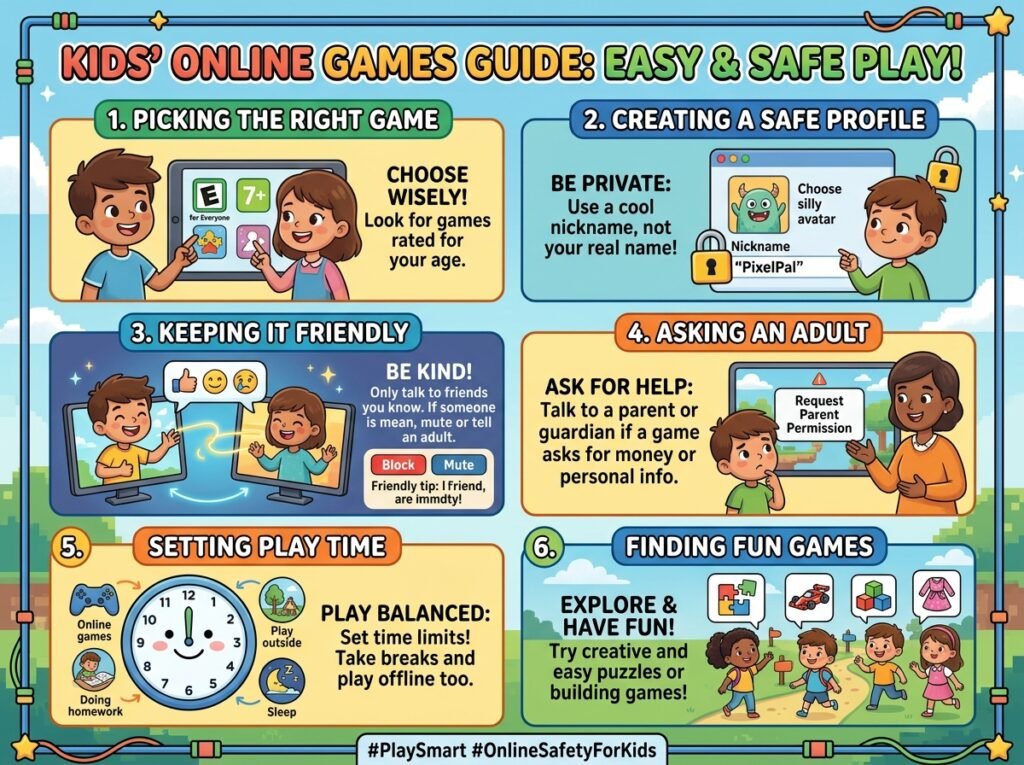
Fun comes first, but not every fun-looking game is a great fit. The strongest kids games usually balance three things: easy access, clear play, and the right level of challenge.
Easy access matters because kids lose patience fast. If a game opens in the browser and starts with a click, that is a big plus. Clear play matters because children should understand the basic goal early. Maybe they are matching colors, finishing a race, solving a maze, or dressing a character. They should not need a long tutorial to get moving.
Challenge is where it gets interesting. A game that is too easy gets boring. A game that is too hard gets abandoned. The sweet spot is a game that feels simple to start but still gives kids something to improve at. Puzzle games often do this well. So do arcade-style games with fast restarts.
Parents also tend to care about tone. Bright visuals, silly themes, familiar characters, and non-intimidating gameplay often work better than games built around pressure or complex mechanics. That does not mean every game has to be super soft or educational. It just means the experience should match the player.
If your child likes to think, puzzle and matching games are usually the safest bet. These games are easy to understand and often help with attention, pattern spotting, and patience. They also work well for younger kids because the controls are usually simple.
If they want movement and energy, racing, runner, and platform games are a better fit. These are great for kids who like quick reactions and clear goals. Start, jump, collect, finish. That kind of structure is easy to follow and fun to repeat.
Dress-up, coloring, and creative games work especially well for kids who want low-pressure play. There is no timer, no losing screen, and no need to master difficult controls. These games are good when a child wants to relax instead of compete.
Sports and action games can be a hit with older kids, but this is where parents may want to pay closer attention. Some action games are perfectly light and playful. Others move too far into themes or visuals that feel meant for older players. The genre itself is not the problem. The style and intensity are what matter.
Parents usually do not want a lecture on internet safety when they are just trying to find a game for a ten-minute break. Fair enough. Still, a few basic habits make a big difference.
Start with games that do not require personal information. The less setup, the better. Browser games that let kids click and play without creating profiles are usually easier for everyone. Keep game sessions in shared family spaces when possible, especially for younger children. It is simpler to help when you can glance at the screen.
Ads are another part of the reality with free games. Some are mild and easy to ignore. Some are noisy and distracting. It depends on the platform. A good gaming site keeps the play experience straightforward and does not bury the game under clutter. That is one reason families often stick with sites that organize titles clearly and refresh them often instead of sending kids all over the web.
If a game includes chat or live interaction, that changes the equation. Multiplayer can be fun, but it usually calls for a little more supervision. For many younger players, solo games or simple local-style competitive games are the easier choice.
One of the biggest mistakes in any kids online games guide is pretending every child should play the same way. Some kids can enjoy twenty minutes of browser games and walk away easily. Others get frustrated when time is up or bounce from game to game without settling.
That does not mean online games are bad. It means the format should fit the child. Short-session browser games are often better than endless-play mobile games because they naturally support quick starts and easy stops. A racing game with a clear finish line is easier to end than a game designed to keep pushing the next reward.
It helps to choose the play window before the game starts. Maybe it is one game before dinner, two rounds after homework, or fifteen minutes while waiting for an appointment. Kids usually respond better when the stop point feels clear. The game is part of the routine, not a surprise battle.
Most families are not looking for a perfect game forever. They want a good game right now. The fastest way to get there is to browse by mood and genre instead of overthinking every title.
If your child is restless, go for action, driving, or running games. If they are calm and want to sit with something, try puzzle or dress-up games. If siblings are taking turns on one device, simple score-based arcade games can work well because each round ends quickly. That keeps arguments lower and momentum higher.
The platform matters too. A site with handpicked categories and lots of fresh options makes it easier to switch gears when one game does not click. That is part of the fun of browser gaming. You are not locked into a purchase or a huge install. You can test a game, keep it if it works, and move on if it does not. DANY Games fits that style well because the whole point is fast browsing and instant play.
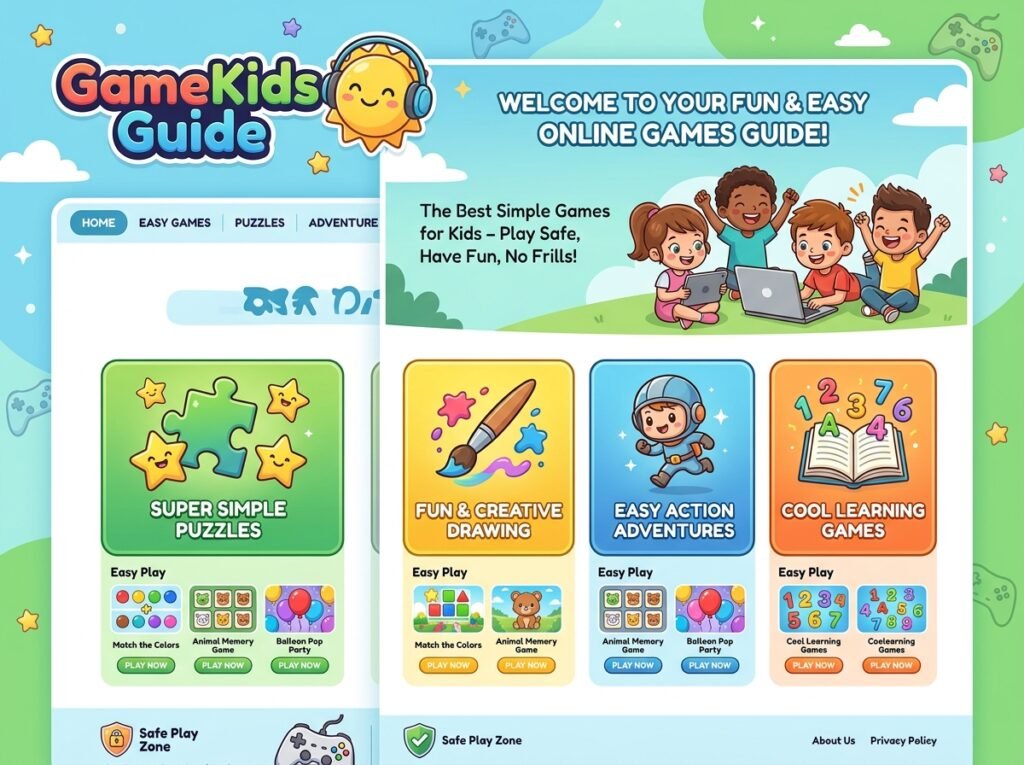
Free browser games are great for convenience, but they are not always deep experiences. That is often the point. They are built for quick fun, not long campaigns or complicated progression. For kids, that can actually be a plus.
Still, it depends on what your child wants. If they love mastering systems, collecting items, or building over time, a lightweight web game may feel too short. If they want immediate fun without commitment, it is perfect. Neither option is better across the board.
There is also a difference between educational value and play value. Some parents want every game to teach a direct skill. Others just want harmless fun that gives a child a break. Both are reasonable. Not every kids game needs to be a lesson. But it should feel age-appropriate, easy to use, and worth the screen time it takes up.
Adults often choose games based on what sounds useful. Kids choose based on what feels fun in the first ten seconds. The best choice usually sits somewhere in the middle. Look for games that are quick to start, easy to understand, and matched to your child’s age and mood.
When online play is simple, it tends to work better. No long setup. No confusing menus. Just pick a game, hit play, and see if it sticks. If it does, great. If not, the next fun round is only a click away.