
One tab, one click, and you’re already playing. That’s the whole point behind today’s casual web gaming trends. People are not showing up for a 20-minute install, a giant tutorial, or a paywall five seconds in. They want something fast, free, and fun enough to fill a break, kill a wait, or turn “just one game” into ten.
What’s changing is not just the games themselves. It’s how people find them, how long they play, and what makes them come back tomorrow. Browser gaming has always been about easy access, but now the best-performing games are even quicker to start, easier to understand, and better at giving players instant wins without asking for much in return.
Attention is short, and browser play fits that reality better than almost any other format. A lot of players are squeezing games into small pockets of time – a study break, a lunch break, a few minutes before bed, or the gap between tasks. That changes what works.
Games with long setup screens, heavy instructions, or confusing menus lose people fast. Simple controls, familiar formats, and visible goals are winning because they respect the player’s time. Match games, runners, shooters, dress-up games, sports challenges, and driving games all benefit from this because they explain themselves almost instantly.
That does not mean every game has to be ultra-basic. It means the first 30 seconds matter more than ever. A game can get deeper later, but it has to earn that extra time first.
The strongest casual web games now get players moving right away. If the player can click Play and understand the objective without reading a wall of text, that’s a huge advantage. It feels better, especially for younger players and anyone browsing on autopilot.
There’s a trade-off here. Super-fast onboarding can sometimes make games feel repetitive if there’s not enough variety afterward. The sweet spot is instant entry with just enough progression, challenge, or visual change to keep each session from feeling identical.
The browser space moves quickly, but a few patterns are showing up again and again.
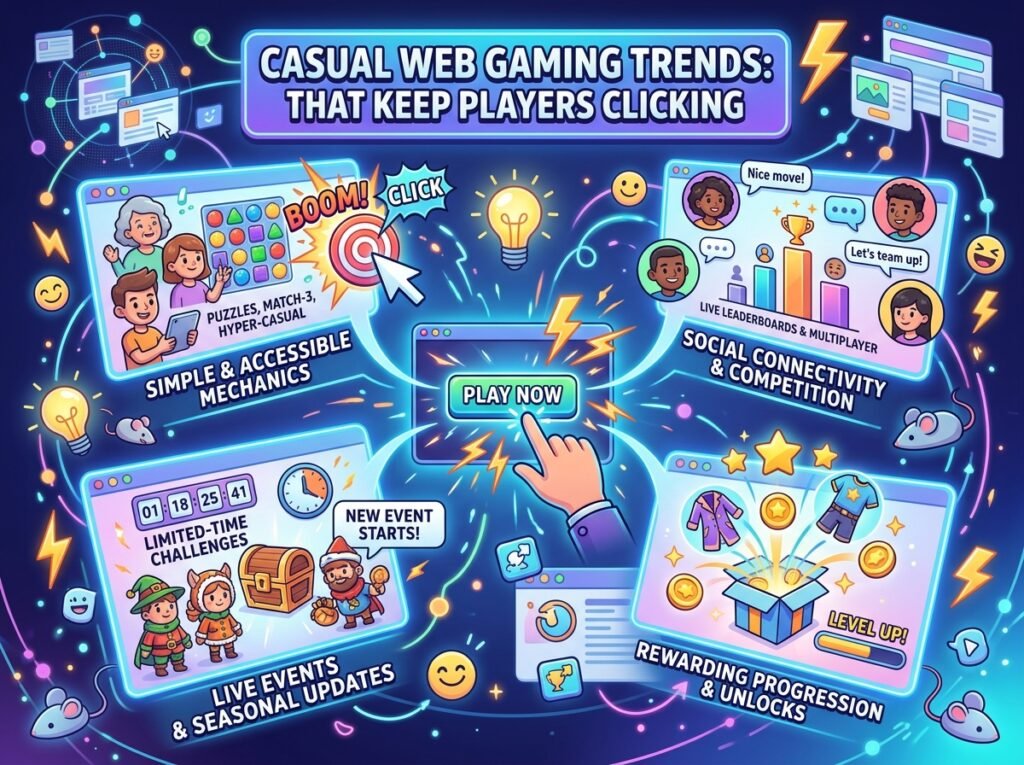
First, short-session design is everywhere. Games are being built around two-minute to ten-minute bursts instead of long commitments. That fits the way people actually use browser portals. A player might sample three puzzle games, switch to a racing title, then finish with a multiplayer round. Variety is part of the experience, not a distraction from it.
Second, familiar game types are staying strong. New ideas matter, but recognizable formats usually get the click. Players know what to expect from a bubble shooter, a stunt-driving game, a soccer challenge, or a simple battle game. That lowers the learning curve and raises the odds of an instant start.
Third, visual clarity is beating visual overload. Bright colors, readable buttons, obvious goals, and clean screens help more than flashy effects. On the web, a game has to look inviting without becoming messy. If too much is happening at once, players bounce.
Fourth, daily freshness matters more than ever. A huge library is good. A huge library that also keeps changing is better. New releases give players a reason to return, and returning is the whole game for browser platforms. One good title can bring a click. A steady stream of new ones builds a habit.
One of the more interesting casual web gaming trends is how often genres blend together. Puzzle games borrow progression systems from role-playing games. Driving games add stunts and collection goals. Dress-up games bring in storytelling or challenge modes. Shooter games simplify controls so they feel closer to arcade action than full combat sims.
This works because browser players often want something familiar with a small twist. Too much innovation can make a game feel like homework. Too little can make it easy to forget. Hybrid casual games hit the middle ground.
Even when people play on desktop, mobile design habits have changed what they expect. Players want large buttons, obvious feedback, fast loading, and controls that make sense immediately. If a game feels clunky, it feels old.
That does not mean browser games are trying to copy mobile apps exactly. In fact, one of their biggest strengths is avoiding app-store friction. No download. No update. No storage warning. Just click and play. But players still bring mobile expectations with them, especially around speed and simplicity.
This is one reason lightweight games continue to perform well. They load fast, run across more devices, and keep the experience easy for a broad audience. For kids, teens, and casual adults, that matters more than technical complexity.
A good casual game still needs a good homepage around it. Players do not always know what they want before they arrive. They browse by mood, category, thumbnail, and curiosity. That makes discovery design a major trend on browser platforms.
Category strength matters. Action, puzzle, sports, kids, shooting, driving, and multiplayer all pull different types of players at different times. Featured sections matter too, because they reduce choice overload. Too many options can be great for depth, but a strong “Play now” path helps users jump in instead of hesitating.
There’s an “it depends” factor here. Some players love endless browsing. Others want the first interesting game they see. The best gaming portals support both behaviors at once.
In casual browser gaming, a title and thumbnail can decide everything. Players make fast decisions. A clear image, recognizable theme, and simple name often outperform something more clever but less obvious.
That sounds basic, but it lines up with how people actually browse entertainment online. They scan, click, test, and move on quickly if something misses. Games that communicate their appeal in one glance have a real edge.
Multiplayer is no longer only for players ready to commit serious time. One of the strongest shifts in casual web gaming trends is the rise of lighter, easier multiplayer experiences. Quick competitions, party-style gameplay, and simple versus formats let people jump into social play without a huge learning curve.
This is especially appealing because it adds replay value. A familiar game feels different when another person is involved. But multiplayer also comes with more risk. If matching takes too long, or the game depends too heavily on other players showing up, the casual magic disappears.
That’s why low-friction multiplayer works best in browser spaces. Fast rounds. Clear rules. Easy rematches. Minimal waiting.
A broad casual audience includes younger players and parents looking for quick, simple options. That keeps accessible design and family-friendly themes relevant. Not every player wants intensity. Sometimes they want coloring, dress-up, simple racing, or easy puzzle solving.
This part of the market is easy to underestimate, but it drives steady traffic because the need is so practical. Parents often want free entertainment that starts fast and feels easy to understand. Kids want bright visuals and instant action. Browser games serve both when the design stays clear and age-appropriate.
More of the same is not enough. Players still want convenience, but they also want smarter variety. That probably means more games that start instantly while offering small rewards, collection goals, unlockable content, and rotating challenges to keep sessions fresh.
It also means platforms that publish often will have an advantage. If there is always something new to try, players have a reason to keep checking back. That model fits casual behavior perfectly. Nobody needs to commit to one massive title when there are ten new chances to play something fun today.
For a browser-first audience, the future looks simple in the best way. Faster starts, clearer design, more variety, and just enough novelty to make the next click feel worth it. DANY Games sits right in that lane because it matches what casual players actually want: free games, quick play, and a huge mix of genres that never stays still for long.
The best trend of all is the one players feel right away – less waiting, more playing. If a game can deliver that in seconds, it has a real shot at becoming part of someone’s daily routine.