
Some games are fun for exactly one person with headphones on, a locked door, and zero interest in sharing. Family friendly browser games are the opposite. They need to load fast, feel easy to understand, and stay fun whether a kid clicks first, a parent joins in, or an older sibling decides to turn it into a contest.
That sounds simple, but it narrows the field fast. A good family game in the browser is not just clean and colorful. It also needs clear goals, forgiving controls, short rounds, and enough variety to keep different ages interested. When a game can do all that without asking for a download, account, or payment, it becomes the kind of thing people actually come back to.
The best family friendly browser games usually start with one big advantage – no setup drama. You open a tab, click Play, and the game gets to the point. That matters when attention spans are short and nobody wants a five-minute tutorial before the fun starts.
They also work because they are flexible. A puzzle game might be relaxing for one player, but it can also become a team effort if two people start calling out moves. A racing game can feel light and silly for younger kids, while older players turn it into a score chase. The format leaves room for different kinds of play, which is exactly what family gaming needs.
There is a trade-off, though. Browser games are usually lighter than big console or PC games. You are not getting giant open worlds or movie-level storytelling every time. What you do get is speed, simplicity, and the kind of instant fun that works on a weekday afternoon, a school break, or ten spare minutes before dinner.
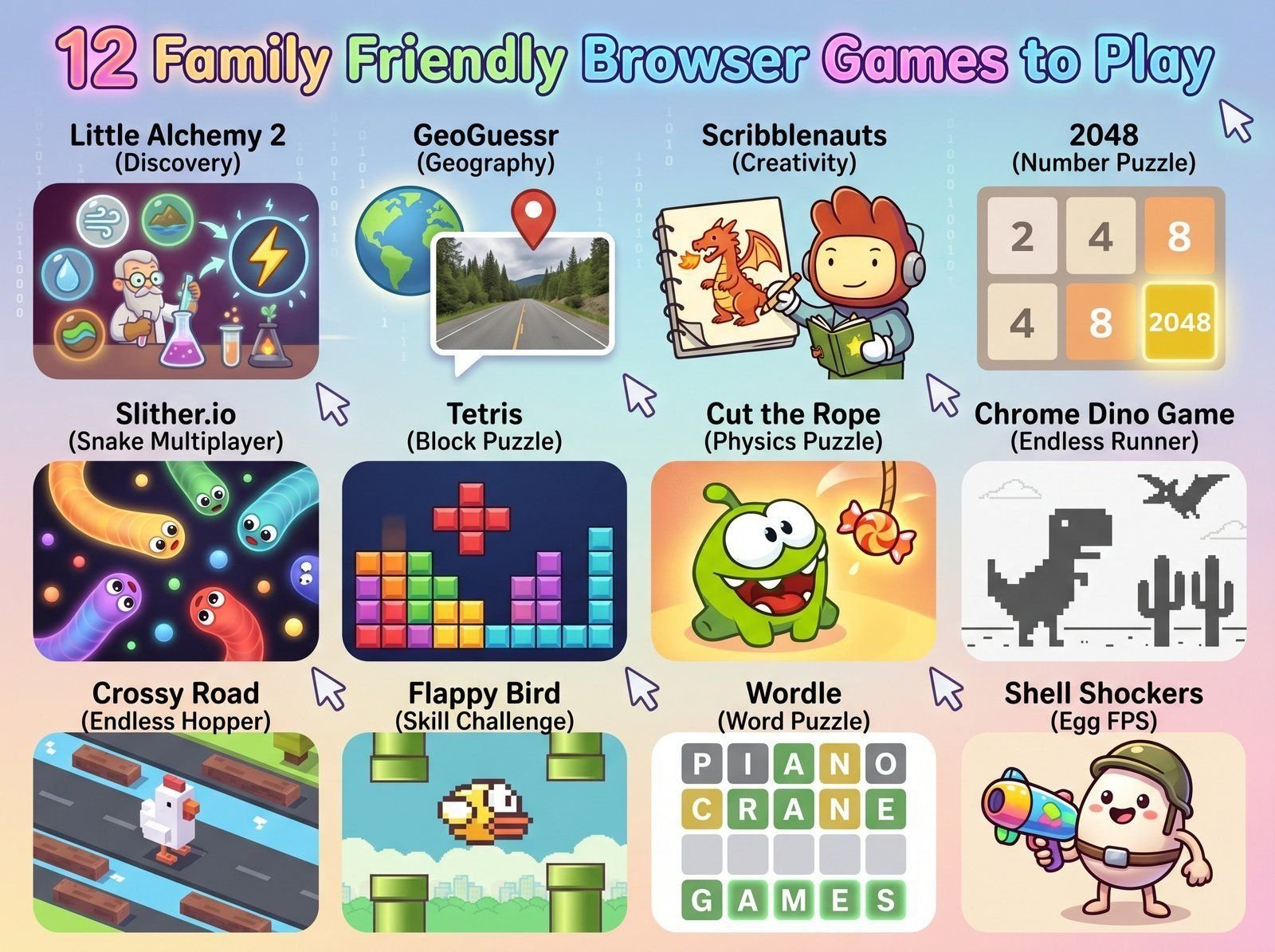
Not every genre lands the same way with mixed ages. Some are naturally better at bringing people together.
Puzzle games are often the easiest win. Matching, sorting, stacking, and pattern-based challenges are easy to explain and satisfying right away. They also avoid one common family problem: skill gaps. A younger player can still contribute, even if they are not as fast.
The nice part is that puzzle games can be quiet or competitive depending on the mood. One day it is casual teamwork. The next day it is all about who clears the board first.
Driving games bring quick energy. The rules are obvious, the goals are clear, and rounds usually move fast. That keeps frustration low. If someone crashes, they can laugh it off and hit Play again.
For families, arcade-style driving tends to work better than realistic simulation. Easy steering, bright visuals, and short tracks make a big difference. Nobody wants to explain tire physics to a seven-year-old who just wants to go fast.
These games do not always get enough credit, but they are great for shared play. Creative games let players choose outfits, colors, looks, and themes without pressure. They work especially well when players want something low-stress and expressive instead of a hard challenge.
This is also where browser gaming shines. Short creative sessions feel natural online. You can make something fun, show it off, and move on to the next game without a big time commitment.
Sports games are familiar even for people who do not play many games. Kick, shoot, score, repeat. That makes them easy to jump into. The better browser sports games keep controls simple and make each match feel quick enough for rematches.
These are especially good for sibling rivalries, parent-versus-kid matches, or casual score battles where everyone gets a turn.
Some browser games are built for younger players first, with larger visuals, simpler interaction, and softer difficulty. These are useful when you want something age-friendly without making it feel like homework.
The sweet spot is a game that teaches lightly through play – logic, timing, memory, pattern recognition – while still feeling like a game, not a lesson in disguise.
This is where it depends. A game that feels perfect for one family can flop for another.
If you have a wide age range, start with games that explain themselves in a few seconds. That usually means puzzle, coloring, matching, endless runner, or simple racing games. If your group is more competitive, sports and score-based arcade games are a stronger fit. If you want calmer play, go creative.
Session length matters too. Some families want one game that lasts a while. Others want to bounce through five different games in twenty minutes. Browser platforms are ideal for the second style because they remove the usual friction. You are not committing to one big experience. You are browsing, testing, and playing whatever clicks.
It also helps to think about who is leading the session. If a younger child is choosing, visual appeal matters a lot. If teens are involved, novelty matters more. If adults are joining, games with clear rules and short rounds tend to keep everyone in the mix.
Downloads sound small until they are not. A required install, a storage warning, a sign-up form, or a device update is often enough to kill the mood before the game even starts. Browser games remove that whole chain of annoyance.
That convenience is not just nice – it changes how people play. Families are more likely to try something new when the cost of trying is basically zero. That leads to more variety, more shared discoveries, and fewer arguments about whether a game is worth the hassle.
It also makes browser games useful across different devices. A desktop in the living room, a laptop at the kitchen table, or a tablet during a road trip break can all become a quick Play moment. The exact experience varies by game, but the low barrier is the point.
If you want a broader look at how digital play affects kids and families, the American Academy of Pediatrics has useful guidance on screen habits and balance. It is a good reminder that the best game choice is not just about content. Timing, context, and how kids engage matter too.
When people hear family-friendly, they sometimes think boring. That is usually a sign of bad game selection, not a problem with the category.
A good family game does not need to be watered down. It just needs to avoid the stuff that creates friction fast – confusing menus, aggressive monetization, harsh themes, or gameplay that punishes new players too quickly. The fun should be immediate, not buried behind complexity.
For parents, a little common sense goes a long way. Stick with game hubs that clearly label categories, keep browsing simple, and make it easy to find kid-appropriate picks. If a platform is built around fast, casual play, that usually helps because the games are designed for quick understanding rather than deep systems.
This is one reason broad, easy-access portals can work so well. A site like DANY Games fits the family browser style because it gives players lots of choices without turning the search into homework. You can jump from puzzles to driving to dress-up to sports in a few clicks and keep the momentum going.
The real strength of these games is not just that they are convenient. It is that they are easy to share.
Big games often ask everyone to commit to the same thing for a long time. Browser games ask for almost nothing up front. That makes them perfect for small moments – after school, during a rainy afternoon, while waiting for food, or when someone says, “Let me pick the next one.”
Those moments are where family gaming actually lives. Not every household wants a two-hour game night. A lot of people just want a quick laugh, a mini challenge, or a few rounds of something colorful and easy. Browser games are built for exactly that kind of play.
And because the format is so flexible, there is always room to switch gears. If a racing game gets too intense, move to a puzzle. If a puzzle gets quiet, load a sports game. If competition starts getting sharp, hand control to a creative game and reset the mood.
That mix of speed, variety, and low pressure is why family friendly browser games keep working year after year. They meet people where they are, without asking for much first.
The best choice is usually the one that gets everyone smiling in under a minute, so keep it simple, keep it light, and when a game stops being fun, just hit back and Play something else.
The comments are closed
[…] 12 Family Friendly Browser Games to Play Play Browser Gaming Guide for Fast, Free Fun Play New Browser Games Daily Worth Playing Play 12 Best Browser Games for Students Play 12 Best Games for Short Sessions Play Best Free Dress Up Games to Play Online Play What Makes a Great Free Online Gaming Portal? Play Play Online Without Downloading Fast Play Why Instant Play Web Games Keep Winning Play 12 Best Instant Web Games to Play Fast Play 15 Best Free Browser Games to Play Now Play 12 Best Driving Games Online to Play Now Play 12 Top Kids Browser Games to Play Now Play Online Games vs Downloads: Which Wins? Play 12 Best IO Games Online to Play Right Now Play 12 Quick Games to Play Online Right Now Play 11 Multiplayer Browser Games Free to Play Play Best Free Online Action Games to Play Now Play How to Play Browser Games the Easy Way Play Are Browser Games Safe to Play Online? Play Browser Games vs Apps: Which Wins? Play Where to Find New Free Online Games Daily Play Fairway Solitaire: How to Play and Win Play Arcade Games Online Free That Are Worth Playing Play PoisonWebGames.com | Poison-Games.com © DANY Games – Online Games Free | Play best free games online, only at DANY Games. Handpicked games for your quality online funtimes! 10 new games everyday. […]